
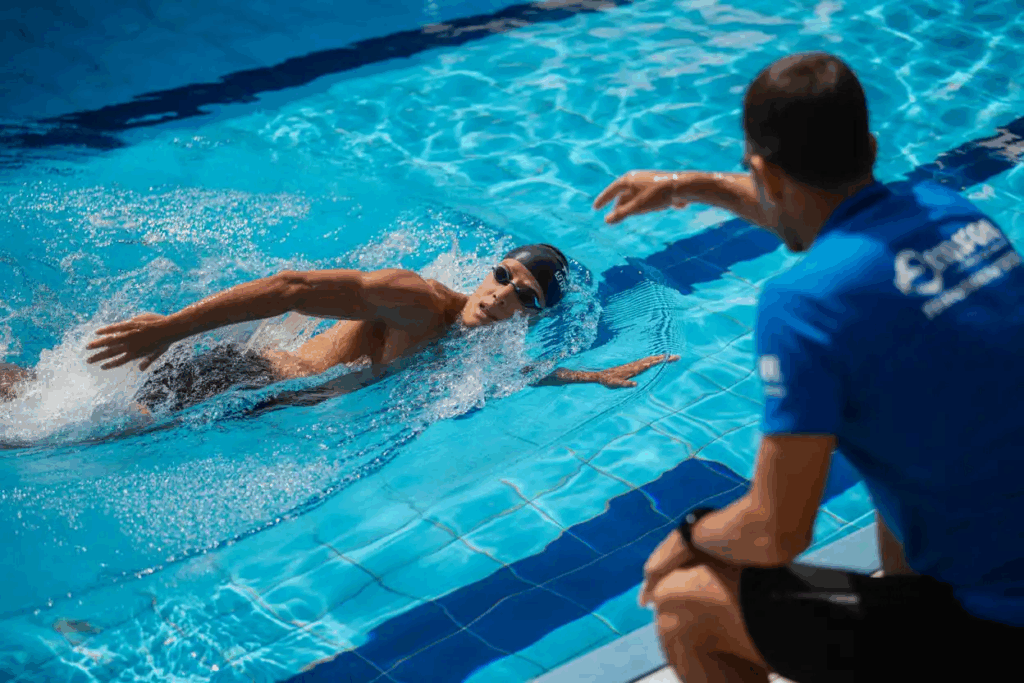
By the time a kid can swim a length, small technique mistakes are already locking in. Stroke Foundations rebuilds each of the four strokes from scratch. Body position first, then propulsion. Kids leave with strokes that hold up when they get tired.
- Freestyle body rotation and bilateral breathing
- Backstroke alignment and steady kick
- Breaststroke timing (pull, breathe, kick, glide)
- Butterfly rhythm without exhaustion
- Streamlines, push-offs, and clean turns
- Kids who can swim but have picked up habits
- Kids who want to try their school or club team
- Swimmers switching between rec swimming and real stroke work
What the first one looks like.
- 01
Watch the swimmer do a length of each stroke they know
- 02
Pick the one biggest thing to fix first
- 03
Drills for that piece, then re-test in real swimming
- 04
Short recap so the swimmer knows what to practice
Things people ask about Stroke Foundations.
My kid can already swim. What will they get from this?
Cleaner strokes that hold up when they're tired. Most kids who can swim a length have small technique mistakes that limit their endurance. Fixing those makes swimming feel easier.
Is this good prep for a school or club team?
Yes. Stroke Foundations covers all four competitive strokes with proper turns and push-offs. Kids come out ready to try out or handle regular practices.
Will they work on all four strokes?
Yes, but we sequence them. Freestyle and backstroke first, then breaststroke, then butterfly. Trying to do all four at once burns kids out.
How many lessons before we see real progress?
Usually noticeable technique changes within three or four lessons. Endurance and consistency take longer, but form changes fast.
A different level might fit better.
Ready for Stroke Foundations?
Tell us about the swimmer. We'll reply the same day with a starting point.